Crowie Continues to Dominate

February 8th, 2010 by Sir Isaac
Crowie Alexander drive

(photo lovingly ripped from Competitor.com and @Delly Carr)

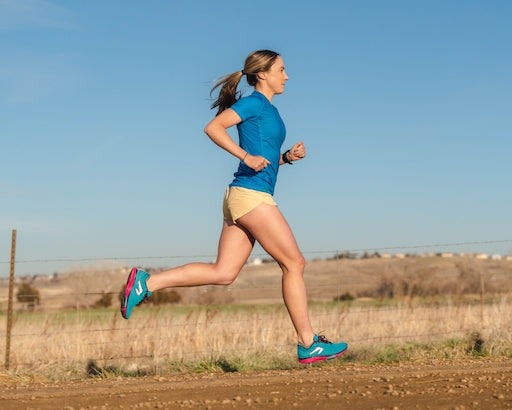
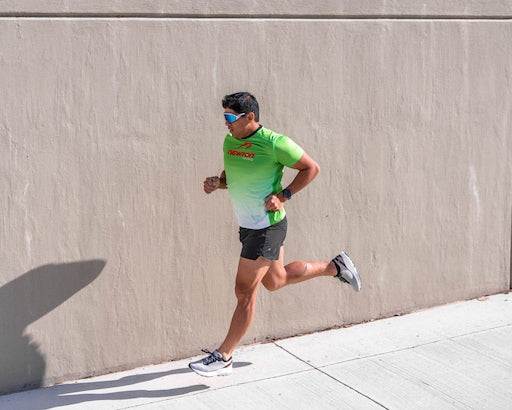
It was a great day for Newton Running at the Ironman 70.3 Geelong event in Australia on Saturday.   With the fastest run split of the day by almost a minute and a half, Craig Alexander took top honors proving that he will once again be a force to be reckoned with in 2010. Fellow Aussie Tim Berkel also had a great run and finished in 3rd place to round out the podium. Read the full race recap at Competitor.com.

Men
1. Craig Alexander (AUS) 3:53:15
2. Leon Griffin (AUS) 3:54:35
3. Tim Berkel (AUS) 3:56:10
4. Peter Schokman (AUS) 3:56:25
5. Clayton Fettell (AUS) 3:56:39

Women
1. Caroline Steffen (SUI) 4:14:32
2. Carrie Lester (AUS) 4:19:32
3. Lisa Marangon (AUS) 4:19:49
4. Samantha Warriner (NZL) 4:23:01
5. Suzanne Alway (AUS) 4:28:33

Great Interview with a Newton Rep

February 4th, 2010 by Sir Isaac

Here’s a cool video shot by Steve Mackel of SoCalRunning.com at the Tuscon Marathon expo.

That “Newton rep” also happens to be Steve Gartside, Newton Running’s president. Steve is always busy managing our rapidly growing company, but he still loves working the expo floor and sharing his passion for natural running with others.

10-Year-Old Triabetic

February 2nd, 2010 by Sir Isaac

Ryan Maloney_1467
Newton Running is a proud sponsor of Ryan Maloney, a 10-year-old from San Diego county who ran his first half marathon last Sunday on behalf of Team Triabetes and Insulindependence.  Ryan has had type 1 diabetes since he was two and has become a great athlete as part of staying healthy. He is the youngest of 50 Team Triabetes members that participated in the Carlsbad marathon and half marathon. Way to go Ryan!

Ryan’s mother sent us this great race report:

Mile 2- Ryan’s teacher  Ms. Bescak jumped on the course with them for 3 miles. Ryan’s blood sugars went low (58) and he took a gel and walked a little bit.

Mile 3- Blood sugars went up to 75

Mile 5- stopped to test blood sugars (82) took another gel.  Mom switches places with Ryan’s teacher for next 3 miles.

Mile 6- bathroom break

Mile 6 1/2- half way through the race and Ryan is smiling and feeling great. Runs the hills with no problems.

Mile 7- the highlight of Ryan’s race- Peter Nerothin the President of Insulindependence comes up from behind us as he is at mile 20 of the full Marathon and cheers Ryan on as he runs with us for a minute.

Mile 8- Mom switches places with two of Ryan’s friends Jacob B. and Jacob U. who run the next 3 miles with him. Ryan doesn’t stop running they just jump in the race course with him.

Mile 10 1/2- Blood sugars drop to 73. Ryan takes another gel.

Mile 11- Ryan’s calves start to hurt and he is starting to feel tired. He walks for a minute.

Mile 12- Ryan’s calves continue to hurt, but he keeps on running.

Mile 13- Ryan finishes the race strong with a time of 2 hours 36 minutes. Second half of the race at a pace of almost 1 minute per mile faster than the first half.

Next year he wants to finish under 2 1/2 hours. (And we’re confident he will!)

Ryan Maloney_Group

Newton’s Take on Barefoot Running

January 29th, 2010 by Sir Isaac

In the past few days we’ve been inundated with calls and messages from friends, customers and fans asking, “did you see (insert national news media)’s story about barefoot running?” The answer is yes, we’ve seen Dr. Lieberman’s study and it clearly validates what Newton Running is all about.

Check out the open letter below from Newton Co-Founder Danny Abshire and our Director of Education, Ian Adamson. Or download a pdf version of the letter here OpenLetterfromNewtonRunning-Barefoot

OUR TAKE ON BAREFOOT RUNNING

Many of you have seen or heard the numerous national news stories about barefoot running in the past few days. This news comes on the heels of the recently published study of “Foot strike patterns and collision forces in habitually barefoot versus shod runners” by Harvard University anthropologist Dan Lieberman. Dr. Lieberman and colleagues conclude that modern, cushioned running shoes change the way humans run and hypothesize based on their biomechanical findings that forefoot and some midfoot strikes may make runners less prone to some kinds of injury.

That comes as no surprise to us at Newton Running. Our company was founded on the belief that the lifted heel in modern running shoes promotes improper form and can contribute to various injuries. Our shoes are designed specifically to accommodate and enhance natural running foot-strike and gait and are based on decades of research and observation on shoe technology and running mechanics.

Running barefoot is not a viable option for most people, except for short training sessions on forgiving surfaces. Plus, the transition to barefoot running or ultra-minimalist shoes can be difficult and/or painful for runners who have spent their whole lives running in heavily cushioned and overly structured shoes.

Newton Running shoes feature a geometry and design that facilitates your natural gait and protects you from harsh running surfaces. We offer the only viable alternative to both modern running shoes and barefoot/ultra-minimalist shoe running.

1. Typical running shoes feature a thick, padded heel and a steep heel-to-forefoot ramp angle (gradient), which encourages heavy heel striking, increases shock loads and dampens afferent feedback (the ability to sense the surface under your shoes). Newton Running shoes have a negligible gradient (between 1% and 3%), which allows your foot to land with a reduced impact and take advantage of your body’s natural suspension system. (click images to enlarge)

heelprofile_illo

2. Newton Running shoes provide industry-leading impact force reduction and energy return with our proprietary Action Reaction Technology™ strategically placed on the sweet spot under your forefoot.

sweetspot

3. Newton Running shoes are built with a biomechanical plate positioned directly under your metatarsals to enhance afferent feedback and allow your feet to spread naturally under load. The soft foam in regular running shoes dampens and blocks valuable protective feedback at foot strike. Without feeling the ground, runners will impact and push harder, creating the possibility for injury.

4. The anatomically designed upper and midsole allows your foot to move naturally throughout the gait cycle. In contrast, most modern running shoes are highly structured, rigidly encasing your foot and preventing natural movement. Over time, this weakens the foot and creates overuse of propulsive muscles/tendons, increasing the likelihood of running injuries.

Coaches around the world routinely use barefoot drills to improve running form. Newton Running has created the first natural running shoes for everyday training and racing that encourage barefoot running form. Join us in the Natural Running revolution.

Sincerely,
Danny Abshire Co-founder and CTO | Ian Adamson Director of Research and Education

Resource Links
Harvard Barefoot Running Page
The Barefoot Runner – Dr. Lieberman video by Nature
NPR.org barefoot running story
BBC barefoot running story
Improve Your Running with Newton Running

Barefoot Running Goes Ballistic

January 28th, 2010 by Sir Isaac

Barefoot running was clearly one of the most talked about trends in the running industry last year. From the bestselling book Born To Run, to the explosive growth of the Vibram Five Fingers, runners everywhere seem to be talking about barefoot running.

Well, the buzz about barefoot running is about to hit a fever pitch. As we’ve talked about in previous posts, Harvard anthropologist Dan Lieberman has been studying the evolution of human running for several years. Dr. Lieberman has just published the results of his study in the journal Nature and the mainstream media is running (cough) with the story. For those of you who listen to NPR on the drive home, you might have heard this story on “All Things Considered” today.  The story is also available on NPR.org and features a pretty interesting video:

Not surprisingly, Vibram Five Fingers are also getting a lot of attention from the media (Vibram sponsored Lieberman’s study). The Five Fingers clearly help people to try barefoot running, while providing some protection from rocks, glass, etc. As we talked about in the previous post, Newton’s are built for Natural Running but some of you may be wondering how Newtons compare to Vibrams. Amanda Brooks asked just that on her blog, Run to the Finish, and Newton Running’s Director of Education and Research, Ian Adamson, had this response:

Running Newton Shoes and Vibram Five Fingers have many similarities, at least from a form perspective. The primary difference is the cushioning and energy return provided by Newtons, which is largely absent in Vibrams.

NewtonGravity

Newton Gravity Trainer: 3mm heel-to-forefoot drop / 2.0% gradient

Both Newton Performance Racers and Vibrams have a 2 mm heel lift, or toe drop depending on how you look at it. This translates into a 1.3% down grade in the shoe, also referred to as ramp angle or drop. Newton Performance Trainers have a 2% gradient, which although very small, can be felt by aware runners. Regular running shoes have a much steeper angle, up to 15% depending on the shoe.

AsicsGelKayano15

Asics Gel Kayano 15: 22mm heel-to-forefoot drop / 14.7% gradient


Barefoot running forces you to run efficiently and preventatively with respect to injury. Vibram’s allow people to experience barefoot running with an added layer of protection from harsh surfaces, while Newton’s go one step further, adding forefoot cushioning and  a significant energy return component.

Newton shoes are much kinder to the body’s structure and musculature when transitioning from a traditional running shoe to barefoot, and allow you to perfect a natural (barefoot) form while providing protection and cushioning. Newton’s active membrane technology has been carefully designed to facilitate afferent feedback, which means the nerves in your forefoot feel the ground very quickly through the shoe. This is achieved through the outer lugs and internal semi-rigid chamber that is connected to the bio-mechanical top plate adjacent to your foot inside the shoe.

Traditional shoe cushioning mechanisms dampens afferent feedback, hampering proprioception and thus hindering your ability to self-regulate the impact of your foot strike. Studies show that runners strike much harder in shoes that dampen afferent feedback, one of the causes of injury. Barefoot runners and runners in shoes that allow you to sense the ground encourage you to run protectively, as if barefoot.

Bottom line is that both Vibrams and Newtons encourage a barefoot or natural running style, but Newtons make it easier for most runners to transition their form after years of wearing ‘traditional’ running shoes.

Moving HQ

January 28th, 2010 by Sir Isaac

We’re moving!

Pardon the interruption while we’re moving the Newton Running Global Headquarters across the street in Boulder to a new, more efficient office workspace, where we’ll also be just upstairs from the Newton Lab and our R&D testing.

MovingBoxes

Sweet Samantha

January 28th, 2010 by Sir Isaac

Sam Sweet

Newton Athlete and best bread baker in the West, Samantha Sweet, sits happily buried under her pile of Newtons. She claims she was “trying to get them organized for a Newton Running coaching clinic with the local cross country team in Las Vegas” but we think she’s really just a hoarder. You know girls and their shoes…I just thought that had more to do with party shoes than stinky trainers!

Sam, thanks for all you do for us here at Newton, and next time you’re in Boulder, we’ll be sure to have plenty of Febreze on hand.

Gaining Momentum

January 28th, 2010 by Sir Isaac

They’re coming, and we’re getting excited!

Trail-m_rev

TERRA MOMENTUS=MOMENTUM
MEN’S off-road TRAINER
WEIGHT: 11.2 oz
SIZE: 6-13,14,15

Trail-w_rev

TERRA MOMENTUS=MOMENTUM
WOMEN’S off-road TRAINER
WEIGHT: 9.2 oz
SIZE: 5-11

UPPER
• Highly breathable, fast-drying, debris-proof closed mesh
• Abrasion resistant collar lining
• Slip-proof laces with heel-securing double eyelets
• Lightweight flexible molded P.U. support frame
• Reinforced toe cap
• Reflective logo and heel tab
• Gusseted tongue

MIDSOLE
• Tuned Action/Reaction Technology™forefoot and heel
• Biomechanical metatarsal sensor plate
• Tuned firm high-rebound EVA
• Midfoot/rearfoot support chassis for added stability
• ETC anti-friction, anti-bacterial sockliner
• Accommodates orthotics

OUTSOLE
• High traction and durability rubber compound

Green Features
• 100% recycled laces, webbing, insole topcover
• 100% recycled box, packaging
• 10% recycled outersole rubber

The Momentum is an off-road guidance trainer designed for runners committed to a more efficient natural running style. It provides intelligent control for all foot types on all types of terrain, from groomed bridle paths to technical mountain trails.

Available JULY 2010 MSRP $139

Natural Running – DEFINED

January 25th, 2010 by Sir Isaac

Terms like barefoot running, forefoot running, midfoot running, chi running, minimalist running, etc. get bandied about so often these days that it’s difficult to define any of them and they’re all starting to lose any true meaning. Here at Newton, we think ‘natural running’ best describes what we’re all about. What do you think? (click image to enlarge)

What is Natural Running

We’re Hiring

January 12th, 2010 by Sir Isaac

We’ve got positions available for two three passionate, motivated and qualified individuals who want to join our growing team. Click the links to download full job descriptions.

TechRepJobDescription1-10

WebDevJobDescription

ExpAssociateDescription